A weekly dinner plan should reduce decisions, not create another rigid schedule to maintain. The most useful plan for a busy family starts with the real calendar, uses flexible meal types, and leaves room for the night that does not go as expected.
Start with your family schedule
Before choosing recipes, mark late workdays, sports practices, appointments, and evenings when everyone eats at a different time. Match the easiest dinners to the busiest nights. Save a meal that needs more chopping or oven time for an evening with breathing room.
Use five flexible dinner slots
1. The fast dinner
Choose one meal that reaches the table in about 30 minutes. Bowls, eggs, pasta, and quick skillet meals work well because portions are easy to adjust.
2. The build-your-own dinner
Tacos, grain bowls, pitas, and baked potatoes let family members choose their own toppings. Put one core protein and one vegetarian option on the table so the same meal fits different preferences.
3. The vegetarian dinner
Plan a dinner around beans, lentils, tofu, eggs, or vegetables. A regular meatless night adds variety and often uses lower-cost pantry ingredients.
4. The pantry dinner
Keep one meal that depends mainly on shelf-stable or frozen food. Tomato pasta with white beans, chickpea soup, or frozen-vegetable fried rice can rescue a week when plans change.
5. The hands-off dinner
Pick a sheet-pan, slow-cooker, or one-pan meal for the day when you need dinner to cook while you handle something else.
Choose two anchor meals first
Start with the two meals your family is most likely to enjoy. These anchors make the plan feel familiar. Build the remaining dinners around ingredients that overlap with them, rather than choosing five unrelated recipes.
Plan ingredient overlap
Look for ingredients that can work twice without making the meals feel identical. Roast peppers for bowls and later tuck them into pitas. Use parsley in a lemon sauce and then in a chopped salad. Cook extra rice for a one-pan dinner later in the week. Intentional overlap shortens the grocery list and cuts food waste.
A realistic sample week
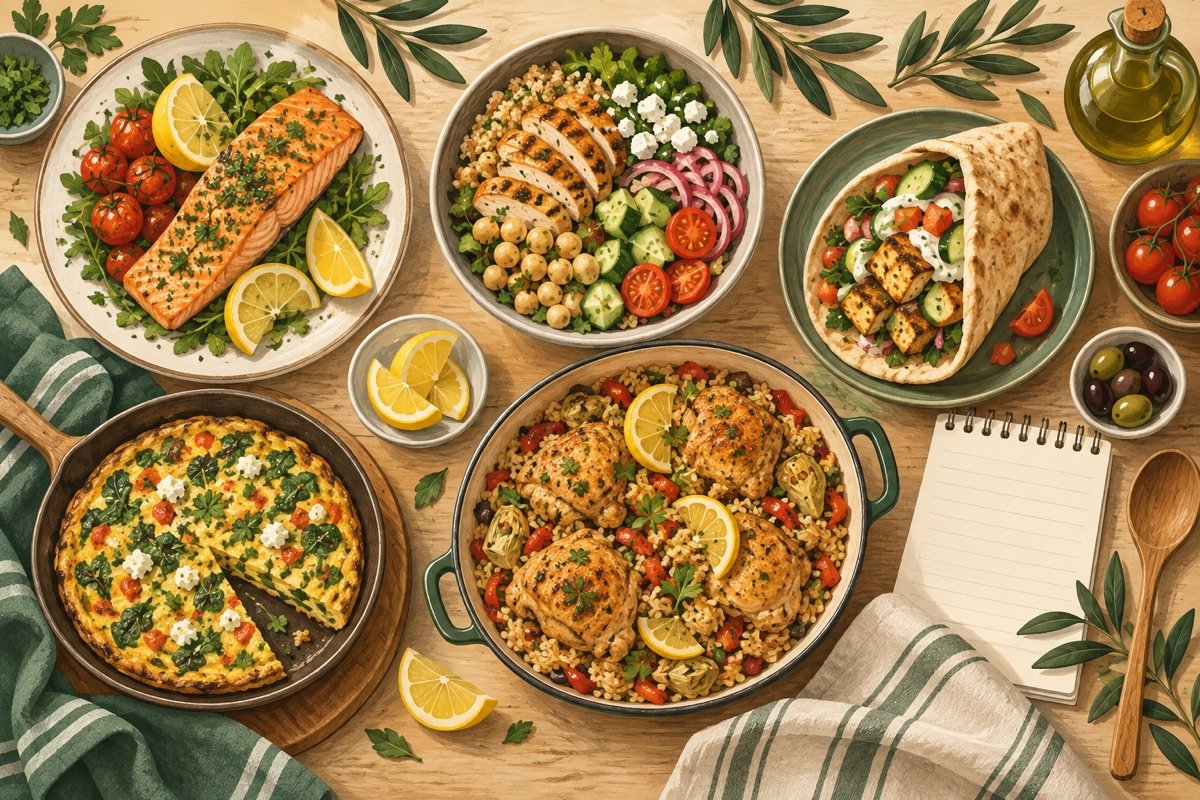
- Monday—fast: Chard, Feta & Pine Nut Frittata with toast and fruit.
- Tuesday—build your own: Greek Chicken Crunch Bowls, with chickpeas as the vegetarian option.
- Wednesday—vegetarian: Crispy Za’atar Tofu Pita Pockets.
- Thursday—pantry: Pasta with canned tomatoes, white beans, spinach, and Parmesan.
- Friday—hands off: Lemon-Oregano Chicken & Rice Bake.
Build one grocery list
Organize the list by produce, proteins, dairy, pantry, and frozen foods. Check the refrigerator and pantry first. Add quantities when they matter—such as two lemons or one pound of chicken—so you do not have to reconstruct the plan in the store.
Create two backup meals
A backup dinner is different from a planned pantry night. It requires almost no thought and can wait for another week. Good choices include frozen ravioli and peas, scrambled eggs and toast, or soup with grilled cheese. Keeping two backups prevents takeout from becoming the only option when a scheduled meal falls apart.
Review the plan in five minutes
At the end of the week, note which meal was easy, which created leftovers, and which ingredients went unused. Use those observations to improve next week. A practical plan gets better through small adjustments, not perfect execution.
Frequently asked questions
How many dinners should I plan?
For many families, five planned dinners plus leftovers, takeout, or a social meal is more realistic than assigning a recipe to all seven nights.
Should every meal be completely different?
No. Repeating components saves time. Change the format or sauce so shared ingredients still feel fresh.
What if my children reject the planned meal?
Include one familiar component at the table, such as bread, fruit, rice, or a preferred vegetable. Build-your-own meals also give children useful choices without requiring a separate dinner.
Health information is general education and is not a substitute for personalized medical advice.
Leave a Reply