Tag: Meal Prep

  • 5 Mediterranean Dinner Formulas for Busy Families

    5 Mediterranean Dinner Formulas for Busy Families

    When dinner needs to happen between homework, practices, and everything else, a flexible formula is often more useful than a rigid recipe. These five Mediterranean dinner ideas use the same dependable building blocks—protein, vegetables, grains, a bright sauce, and a finishing crunch—so you can shop once and make the week feel varied.

    The plan is designed for busy families: each dinner can be assembled in about 30 minutes when the basic ingredients are prepped ahead, and every idea includes an easy vegetarian version.

    The five-part Mediterranean dinner formula

    1. Choose a protein: chicken, salmon, turkey meatballs, eggs, chickpeas, lentils, tofu, or white beans.
    2. Add at least two vegetables: one cooked vegetable and one crisp or raw vegetable create contrast without extra work.
    3. Pick a base: couscous, brown rice, farro, whole-wheat pita, or roasted potatoes.
    4. Make one bright sauce: lemon-herb yogurt, tahini dressing, or a simple olive-oil vinaigrette ties the meal together.
    5. Finish with flavor: feta, olives, toasted nuts, fresh herbs, or a pinch of za’atar keeps repeat ingredients interesting.

    Monday: lemon-herb grain bowls

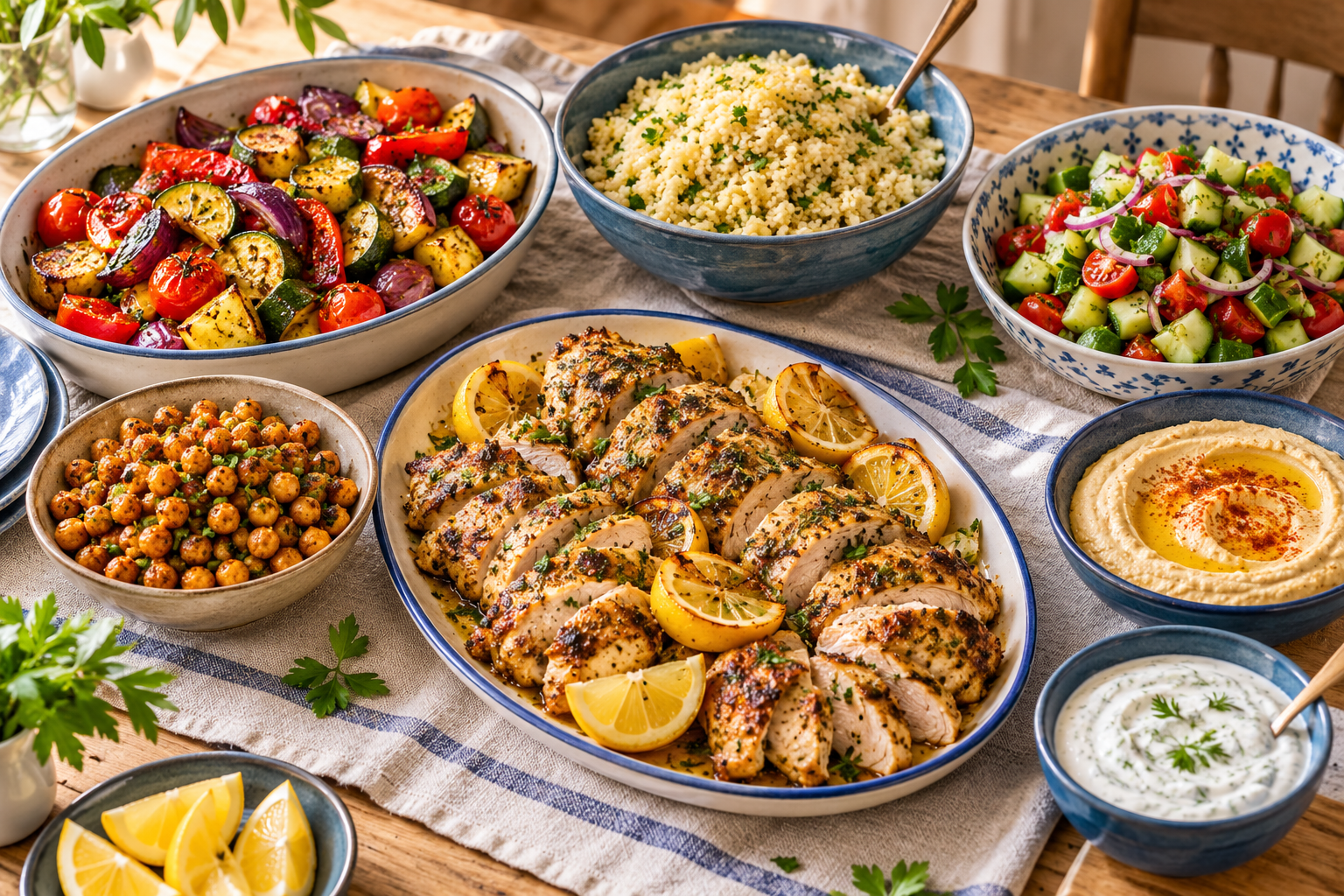
    Start the week with bowls because everyone can build their own. Layer couscous or brown rice with lemon-oregano chicken, roasted zucchini and peppers, chopped cucumber and tomato, hummus, and a spoonful of yogurt sauce.

    Vegetarian version: replace the chicken with crispy chickpeas. Dry canned chickpeas well, toss with olive oil, oregano, garlic powder, and a little salt, then roast until lightly crisp.

    Tuesday: sheet-pan pita night

    Warm whole-wheat pitas and fill them with sheet-pan chicken strips, red onion, bell peppers, shredded lettuce, and tzatziki. Put the components on the table and let everyone choose their own combination.

    Vegetarian version: roast thick slices of tofu or cauliflower on the same type of sheet pan. A dusting of za’atar adds savory flavor without making the meal spicy.

    Wednesday: tomato, spinach, and white bean skillet

    Sauté garlic in olive oil, add canned tomatoes and drained white beans, then fold in spinach until wilted. Finish with lemon and feta, and serve with toasted pita or leftover grain. For a heartier version, nestle cooked turkey meatballs into the sauce before serving.

    Vegetarian version: the white beans already provide the main protein. Add extra beans or a second handful of spinach for larger appetites.

    Thursday: Mediterranean baked potato bar

    Split baked potatoes and set out chopped chicken, chickpeas, cucumber-tomato salad, olives, feta, hummus, and yogurt sauce. Potatoes can be baked ahead and reheated, making this one of the easiest dinners in the plan.

    Vegetarian version: use chickpeas and hummus as the main filling, then add feta or toasted pumpkin seeds for a savory finish.

    Friday: clean-out-the-fridge chopped salad

    Turn the remaining vegetables, grains, protein, and herbs into a large chopped salad. Use crisp romaine as the base, add whatever remains from the week, and toss everything with lemon vinaigrette. Serve it with toasted pita wedges so it still feels like dinner.

    Vegetarian version: add white beans or chickpeas, plus feta, nuts, or seeds. If the family prefers a warm meal, heat the grains and protein before spooning them over the greens.

    One shopping list for all five dinners

    Produce

    • 4 lemons
    • 2 cucumbers
    • 1 pint cherry tomatoes
    • 3 bell peppers
    • 2 zucchini
    • 2 red onions
    • 1 bag baby spinach
    • 1 head romaine
    • 4 large baking potatoes
    • Fresh parsley and dill

    Protein and refrigerated items

    • 2 pounds boneless chicken or your preferred family protein
    • 2 cans chickpeas
    • 2 cans white beans
    • Plain Greek yogurt
    • Hummus
    • Feta cheese

    Pantry

    • Couscous, brown rice, or farro
    • Whole-wheat pita
    • Canned tomatoes
    • Olives
    • Olive oil and red-wine vinegar
    • Oregano, garlic powder, paprika, and za’atar
    • Optional nuts or pumpkin seeds

    The 45-minute prep session

    1. Cook one large batch of grain.
    2. Roast two sheet pans of vegetables.
    3. Cook the chicken or your chosen vegetarian protein.
    4. Chop the cucumber-tomato salad and keep it undressed.
    5. Stir together lemon-herb yogurt and shake up a lemon vinaigrette.

    Cool cooked food promptly and refrigerate it in shallow, covered containers. Keep sauces and crisp vegetables separate until serving so the components stay fresh. Use your judgment and current food-safety guidance when deciding how long to store prepared foods.

    Why this plan works for busy families

    The ingredients repeat, but the format changes: bowl, pita, skillet, potato bar, and salad. That reduces shopping and prep while giving the family a different experience each night. The vegetables, beans, whole grains, olive oil, and flexible protein choices also make it easier to build balanced plates without tracking complicated rules.

    Start with the formula, swap ingredients based on your family’s preferences, and write down the combinations everyone wants again. That small feedback loop is how a dinner plan becomes easier every week.
  • Mediterranean Meal Prep for Busy Families: A 60-Minute Sunday Plan

    Mediterranean Meal Prep for Busy Families: A 60-Minute Sunday Plan

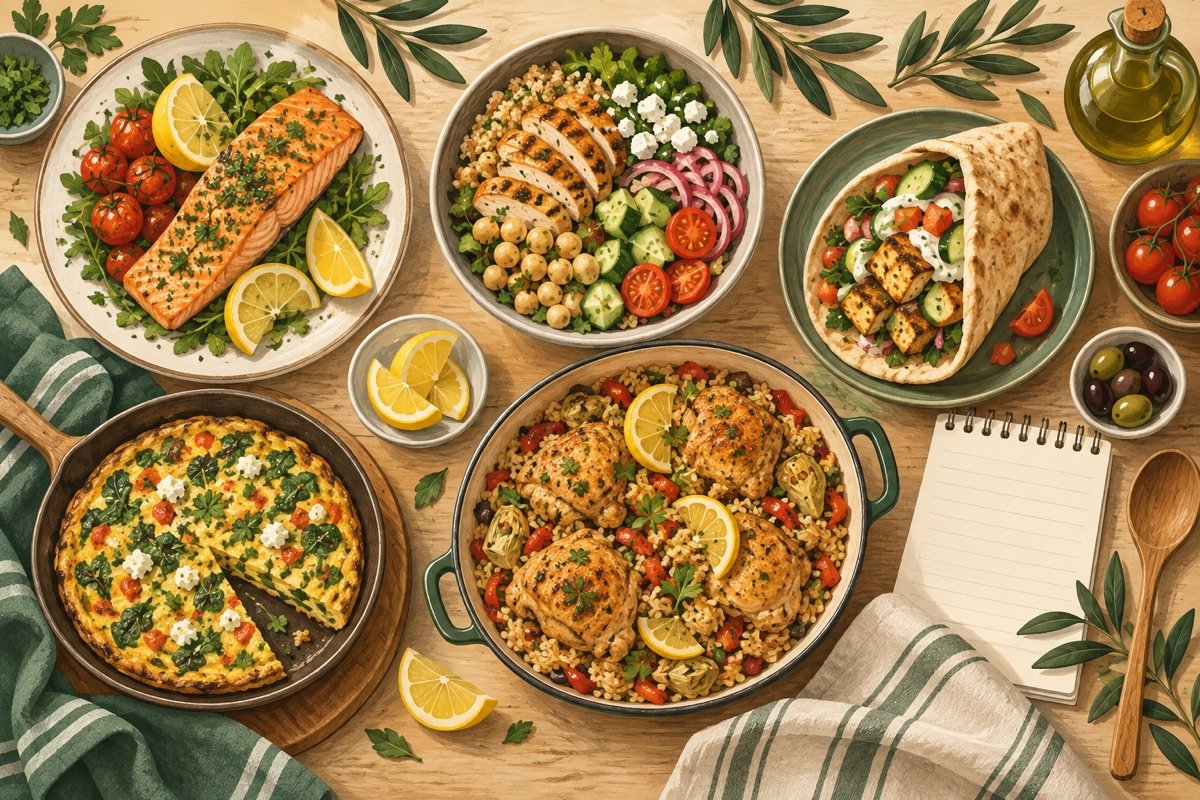
    Busy weeknights feel easier when the useful parts of dinner are already waiting in the refrigerator. This Mediterranean meal prep for busy families turns one focused hour into flexible building blocks for several dinners—without forcing everyone to eat the same leftovers all week.

    What this 60-minute prep session accomplishes

    By the end of the hour, you will have a cooked grain, a tray of roasted vegetables, washed fresh produce, a bright lemon-herb sauce, and one or two proteins ready to finish. Those components can become bowls, wraps, salads, or a simple plated dinner.

    Before you start

    • Clear one refrigerator shelf for labeled containers.
    • Set out two sheet pans, one saucepan, a cutting board, and five storage containers.
    • Heat the oven to 425°F.
    • Choose one grain: brown rice, quinoa, farro, or couscous.
    • Choose a core protein plus a vegetarian option, such as chicken and chickpeas.

    The 60-minute Mediterranean meal-prep plan

    Minutes 0–10: Start the longest jobs

    Rinse and start your grain according to the package directions. Cut sturdy vegetables such as bell peppers, zucchini, red onion, broccoli, or cauliflower. Toss them with olive oil, oregano, garlic powder, salt, and black pepper, then spread them across a sheet pan.

    Minutes 10–25: Prep proteins and fresh vegetables

    Season chicken with lemon zest, oregano, paprika, and olive oil. On a second pan, toss drained chickpeas with olive oil and the same seasonings. Wash and dry cucumbers, cherry tomatoes, lettuce, and herbs. Keeping fresh vegetables dry helps them stay crisp longer.

    Minutes 25–40: Roast and make the sauce

    Roast the vegetables and proteins until the chicken reaches 165°F and the chickpeas are lightly crisp. Whisk Greek yogurt, lemon juice, olive oil, dill, garlic, salt, and a splash of water into a pourable sauce. For a dairy-free version, use tahini instead of yogurt.

    Minutes 40–50: Cool and portion

    Spread the cooked grain on a plate or clean sheet pan so it cools quickly. Divide roasted vegetables, grain, chicken, and chickpeas into separate containers. Separate storage lets each person build a dinner they enjoy.

    Minutes 50–60: Label and plan the first three dinners

    Label each container with the prep date. Write three simple combinations on a note where the family can see it: grain bowls, pita night, and a big chopped salad. Freeze any cooked food you will not use within four days.

    How to turn the components into family dinners

    • Monday: Build bowls inspired by our Greek Chicken Crunch Bowls, with chickpeas for the vegetarian version.
    • Tuesday: Fill warm pitas with vegetables, sauce, and protein. Our Crispy Za’atar Tofu Pita Pockets are another easy meatless option.
    • Wednesday: Serve a quick tray dinner using the flavor ideas from our Lemon-Dill Salmon Traybake.
    • Thursday: Toss the remaining vegetables and grain with greens, feta, olives, and lemon dressing.

    A grocery list that avoids waste

    Choose ingredients that can appear in more than one meal. Lemons flavor the protein, sauce, and salad dressing. Cucumbers and tomatoes work in bowls, pitas, and salads. Greek yogurt can become sauce or breakfast. This overlap keeps the list short and helps you use what you buy.

    Food storage and safety

    Refrigerate cooked food within two hours. Store cooked chicken, grains, and roasted vegetables in covered containers and use them within three to four days. Reheat cooked foods thoroughly. Keep sauces and delicate greens separate until serving.

    Frequently asked questions

    Do I need to cook every dinner on Sunday?

    No. The goal is to prepare versatile components so weeknight cooking takes less time and still tastes fresh.

    How can children help?

    Kids can wash produce, tear lettuce, measure seasonings, stir sauce, and label containers with supervision.

    What is the easiest vegetarian swap?

    Use chickpeas, white beans, lentils, tofu, or hard-boiled eggs. Season them with the same herbs used for the core meal.

    Health information is general education and is not a substitute for personalized medical advice.

    {“@context”:”https://schema.org”,”@type”:”HowTo”,”name”:”Mediterranean Meal Prep for Busy Families: A 60-Minute Sunday Plan”,”description”:”A practical 60-minute Mediterranean meal-prep plan for easier family dinners.”,”totalTime”:”PT60M”,”step”:[{“@type”:”HowToStep”,”name”:”Start grain and vegetables”,”text”:”Cook one grain and prepare a sheet pan of seasoned vegetables.”},{“@type”:”HowToStep”,”name”:”Prepare proteins and produce”,”text”:”Season a core protein and vegetarian option, then wash fresh vegetables.”},{“@type”:”HowToStep”,”name”:”Roast and make sauce”,”text”:”Roast the prepared foods and whisk a lemon-herb sauce.”},{“@type”:”HowToStep”,”name”:”Cool and portion”,”text”:”Cool foods promptly and store components separately.”},{“@type”:”HowToStep”,”name”:”Label and plan”,”text”:”Label containers and choose the first three dinner combinations.”}]}

  • How to Build a Weekly Dinner Plan Your Family Will Actually Use

    How to Build a Weekly Dinner Plan Your Family Will Actually Use

    A weekly dinner plan should reduce decisions, not create another rigid schedule to maintain. The most useful plan for a busy family starts with the real calendar, uses flexible meal types, and leaves room for the night that does not go as expected.

    Start with your family schedule

    Before choosing recipes, mark late workdays, sports practices, appointments, and evenings when everyone eats at a different time. Match the easiest dinners to the busiest nights. Save a meal that needs more chopping or oven time for an evening with breathing room.

    Use five flexible dinner slots

    1. The fast dinner

    Choose one meal that reaches the table in about 30 minutes. Bowls, eggs, pasta, and quick skillet meals work well because portions are easy to adjust.

    2. The build-your-own dinner

    Tacos, grain bowls, pitas, and baked potatoes let family members choose their own toppings. Put one core protein and one vegetarian option on the table so the same meal fits different preferences.

    3. The vegetarian dinner

    Plan a dinner around beans, lentils, tofu, eggs, or vegetables. A regular meatless night adds variety and often uses lower-cost pantry ingredients.

    4. The pantry dinner

    Keep one meal that depends mainly on shelf-stable or frozen food. Tomato pasta with white beans, chickpea soup, or frozen-vegetable fried rice can rescue a week when plans change.

    5. The hands-off dinner

    Pick a sheet-pan, slow-cooker, or one-pan meal for the day when you need dinner to cook while you handle something else.

    Choose two anchor meals first

    Start with the two meals your family is most likely to enjoy. These anchors make the plan feel familiar. Build the remaining dinners around ingredients that overlap with them, rather than choosing five unrelated recipes.

    Plan ingredient overlap

    Look for ingredients that can work twice without making the meals feel identical. Roast peppers for bowls and later tuck them into pitas. Use parsley in a lemon sauce and then in a chopped salad. Cook extra rice for a one-pan dinner later in the week. Intentional overlap shortens the grocery list and cuts food waste.

    A realistic sample week

    Build one grocery list

    Organize the list by produce, proteins, dairy, pantry, and frozen foods. Check the refrigerator and pantry first. Add quantities when they matter—such as two lemons or one pound of chicken—so you do not have to reconstruct the plan in the store.

    Create two backup meals

    A backup dinner is different from a planned pantry night. It requires almost no thought and can wait for another week. Good choices include frozen ravioli and peas, scrambled eggs and toast, or soup with grilled cheese. Keeping two backups prevents takeout from becoming the only option when a scheduled meal falls apart.

    Review the plan in five minutes

    At the end of the week, note which meal was easy, which created leftovers, and which ingredients went unused. Use those observations to improve next week. A practical plan gets better through small adjustments, not perfect execution.

    Frequently asked questions

    How many dinners should I plan?

    For many families, five planned dinners plus leftovers, takeout, or a social meal is more realistic than assigning a recipe to all seven nights.

    Should every meal be completely different?

    No. Repeating components saves time. Change the format or sauce so shared ingredients still feel fresh.

    What if my children reject the planned meal?

    Include one familiar component at the table, such as bread, fruit, rice, or a preferred vegetable. Build-your-own meals also give children useful choices without requiring a separate dinner.

    Health information is general education and is not a substitute for personalized medical advice.

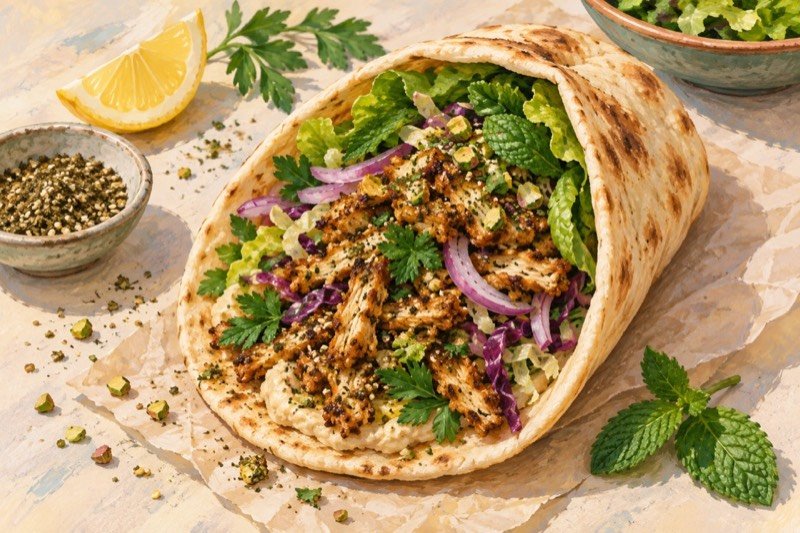
  • Crispy Za’atar Tofu Pita Pockets

    Crispy Za’atar Tofu Pita Pockets

    Crispy tofu, roasted cabbage, hummus, and lemony herbs fill warm pitas for a satisfying vegetarian dinner.

    Serves: 4   Prep: 15 minutes   Cook: 25 minutes

    Ingredients

    • 1 package (16 ounces) extra-firm tofu, drained
    • 4 cups thinly sliced green cabbage
    • 1 small red onion, thinly sliced
    • 3 tablespoons olive oil, divided
    • 1 tablespoon cornstarch
    • 2 teaspoons za’atar, divided
    • 1/2 teaspoon smoked paprika
    • 3/4 teaspoon kosher salt, divided
    • 1 lemon
    • 1/3 cup chopped parsley
    • 2 tablespoons chopped mint
    • 1/4 cup chopped pistachios
    • 4 whole-wheat pitas
    • 3/4 cup hummus

    Instructions

    1. Heat the oven to 425°F. Line two sheet pans with parchment.
    2. Pat the tofu dry and tear it into small uneven pieces. Toss with 1 tablespoon olive oil, cornstarch, 1 teaspoon za’atar, paprika, and 1/4 teaspoon salt. Spread on one pan.
    3. Toss the cabbage and onion with 1 tablespoon olive oil and 1/4 teaspoon salt. Spread on the second pan.
    4. Roast both pans for 20 to 25 minutes, stirring and switching racks halfway, until the tofu is crisp and the cabbage has browned edges.
    5. Zest and juice the lemon. Mix with the parsley, mint, pistachios, remaining za’atar, olive oil, and salt.
    6. Warm the pitas. Spread each with hummus, then fill with tofu, cabbage, and the herb mixture.

    Prep ahead

    • Slice the cabbage and onion and mix the dry tofu seasonings up to 2 days ahead.

    Easy swaps

    • Use sunflower seeds instead of pistachios for a nut-free variation.
    • Serve over rice if pita is unavailable.

    Storage and reheating

    Refrigerate the cooked tofu and cabbage for up to 3 days. Re-crisp on a sheet pan at 400°F; assemble pitas just before eating.

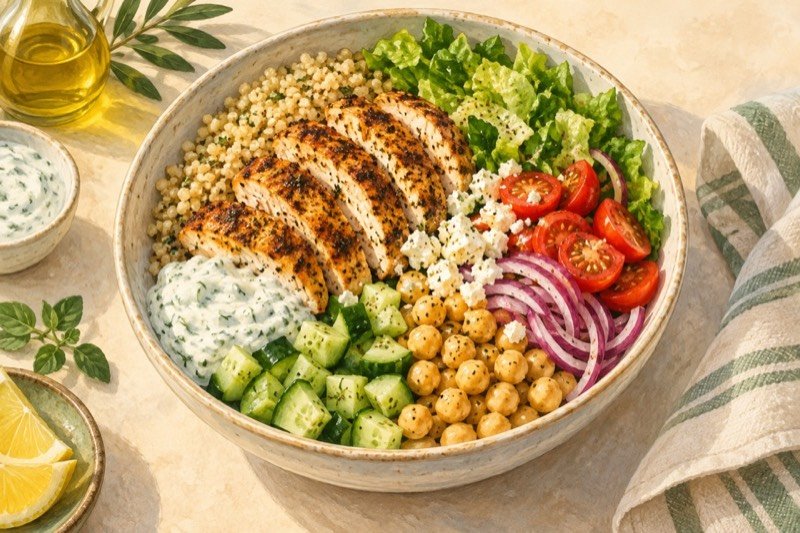
  • Family Greek Chicken Crunch Bowls

    Family Greek Chicken Crunch Bowls

    Lemon-paprika chicken, grains, crisp vegetables, feta, and a cool yogurt sauce make a build-your-own dinner everyone can adjust.

    Serves: 4   Prep: 20 minutes   Cook: 15 minutes

    Ingredients

    • 1 1/4 pounds boneless skinless chicken thighs
    • 2 tablespoons extra-virgin olive oil, divided
    • 1 lemon
    • 1 teaspoon smoked paprika
    • 1 teaspoon dried oregano
    • 3/4 teaspoon kosher salt
    • 2 cups cooked brown rice or quinoa
    • 1 small romaine heart, chopped
    • 1 English cucumber, diced
    • 1 cup cherry tomatoes, halved
    • 1/3 cup crumbled feta
    • 3/4 cup plain Greek yogurt
    • 1 small garlic clove, grated
    • 2 tablespoons chopped fresh dill

    Instructions

    1. Cut the chicken into 1-inch pieces. Toss with 1 tablespoon olive oil, the juice of half the lemon, paprika, oregano, and 1/2 teaspoon salt.
    2. Stir the yogurt with the remaining lemon juice, garlic, dill, remaining salt, and 1 tablespoon water.
    3. Heat a large skillet over medium-high. Cook the chicken in a single layer for 7 to 9 minutes, turning occasionally, until browned and 165°F inside.
    4. Warm the rice or quinoa. Divide it among four bowls with romaine, cucumber, and tomatoes.
    5. Add the chicken, feta, and yogurt sauce. Let everyone toss or keep the components separate.

    Prep ahead

    • Cook the grain, mix the sauce, and chop the vegetables up to 3 days ahead.

    Easy swaps

    • Use chickpeas or baked tofu for a vegetarian bowl.
    • Swap feta for chopped olives if avoiding dairy.

    Storage and reheating

    Refrigerate chicken, grain, vegetables, and sauce separately for up to 3 days. Reheat only the chicken and grain.

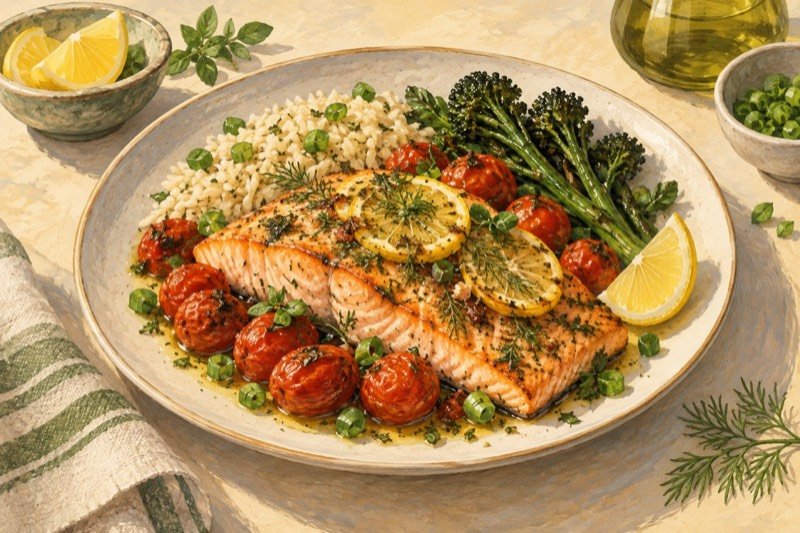
  • Weeknight Lemon-Dill Salmon Traybake

    Weeknight Lemon-Dill Salmon Traybake

    Tender salmon, blistered tomatoes, and green beans roast together under a bright lemon-dill dressing.

    Serves: 4   Prep: 12 minutes   Cook: 16 minutes

    Ingredients

    • 1 1/4 pounds skin-on salmon fillet, cut into 4 portions
    • 12 ounces green beans, trimmed
    • 2 cups cherry tomatoes
    • 3 tablespoons extra-virgin olive oil, divided
    • 1 lemon
    • 2 garlic cloves, finely grated
    • 1 teaspoon dried oregano
    • 1/2 teaspoon kosher salt, plus more to taste
    • 1/4 teaspoon black pepper
    • 1/4 cup chopped fresh dill

    Instructions

    1. Heat the oven to 425°F. Line a large rimmed sheet pan with parchment.
    2. Toss the green beans and tomatoes with 1 tablespoon olive oil and a pinch of salt. Roast for 6 minutes.
    3. Finely zest the lemon, then juice half of it. Stir the zest and juice with the remaining olive oil, garlic, oregano, salt, pepper, and half the dill.
    4. Move the vegetables aside and place the salmon on the pan, skin-side down. Spoon most of the dressing over the fish and vegetables.
    5. Roast for 9 to 12 minutes, until the thickest part of the salmon reaches 145°F and flakes easily. Finish with the remaining dill and lemon wedges.

    Prep ahead

    • Trim the beans and mix the dressing up to 24 hours ahead.

    Easy swaps

    • Use asparagus or broccoli florets in place of green beans.
    • Parsley works in place of dill.

    Storage and reheating

    Refrigerate cooled salmon and vegetables in separate airtight containers for up to 2 days. Reheat gently or serve the salmon chilled.

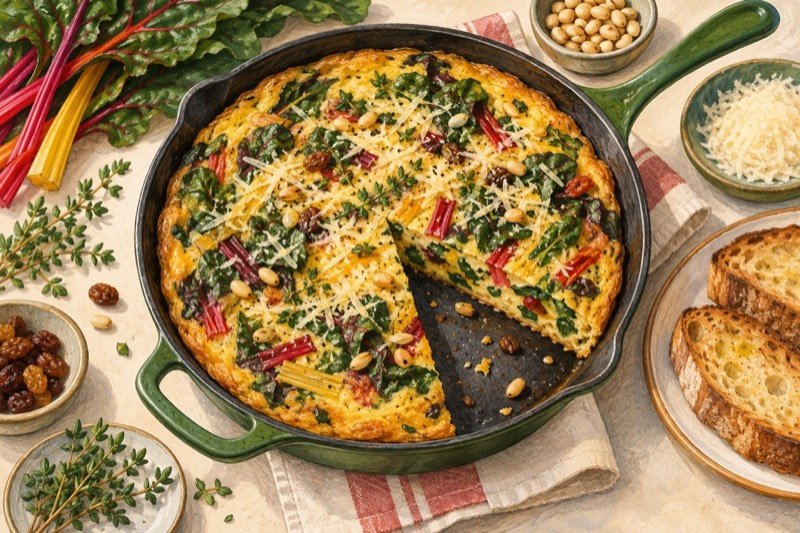
  • Golden Chard, Feta & Pine Nut Frittata

    Golden Chard, Feta & Pine Nut Frittata

    Tender chard, creamy feta, and toasted pine nuts turn eggs into a colorful pantry-friendly dinner.

    Serves: 4   Prep: 15 minutes   Cook: 22 minutes

    Ingredients

    • 1 large bunch Swiss chard
    • 1 small yellow onion, thinly sliced
    • 2 tablespoons extra-virgin olive oil
    • 1 garlic clove, minced
    • 8 large eggs
    • 1/3 cup milk
    • 1/2 teaspoon kosher salt
    • 1/4 teaspoon black pepper
    • 1/2 cup crumbled feta
    • 2 tablespoons pine nuts
    • 1 tablespoon chopped fresh thyme or parsley

    Instructions

    1. Heat the oven to 400°F. Separate the chard stems from the leaves. Thinly slice the stems and roughly chop the leaves.
    2. Warm the olive oil in a 10-inch oven-safe skillet over medium heat. Cook the onion and chard stems for 5 minutes. Add the garlic and leaves and cook until wilted and any liquid has evaporated, about 4 minutes.
    3. Whisk the eggs, milk, salt, and pepper. Stir in half the feta, then pour over the vegetables. Scatter the remaining feta and pine nuts on top.
    4. Cook without stirring for 3 minutes, until the edges begin to set. Transfer to the oven and bake for 9 to 12 minutes, until the center is just set.
    5. Rest for 5 minutes, sprinkle with herbs, and cut into wedges.

    Prep ahead

    • Wash and cut the chard up to 2 days ahead.

    Easy swaps

    • Use spinach or kale in place of chard.
    • Pumpkin seeds can replace pine nuts.

    Storage and reheating

    Refrigerate wedges in an airtight container for up to 3 days. Serve cold, at room temperature, or warmed briefly.

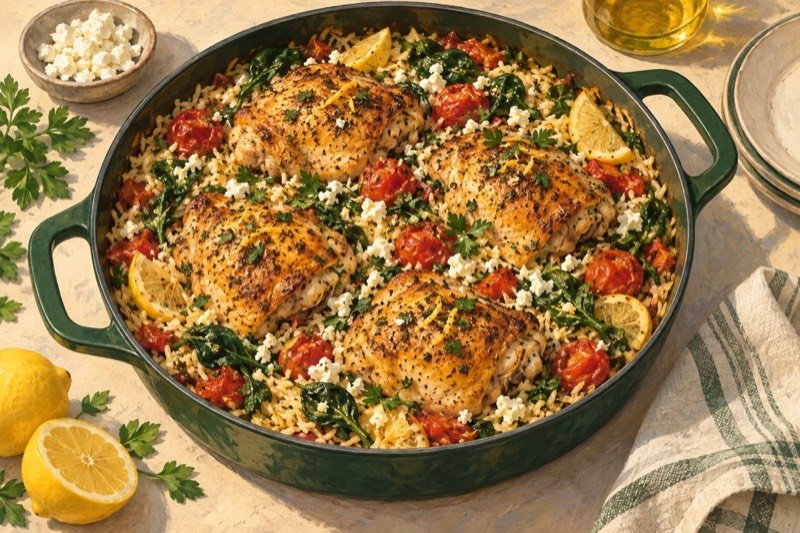
  • Lemon-Oregano Chicken Rice Bake

    Lemon-Oregano Chicken Rice Bake

    Juicy chicken thighs bake over lemony spinach rice in one family-size pan with a feta finish.

    Serves: 6   Prep: 20 minutes   Cook: 55 minutes

    Ingredients

    • 2 pounds boneless skinless chicken thighs
    • 2 tablespoons extra-virgin olive oil, divided
    • 2 lemons
    • 3 garlic cloves, minced
    • 2 teaspoons dried oregano, divided
    • 1 teaspoon smoked paprika
    • 1 teaspoon kosher salt, divided
    • 1 small yellow onion, diced
    • 1 1/2 cups long-grain white rice
    • 3 cups low-sodium chicken broth
    • 3 cups baby spinach, chopped
    • 1/2 cup crumbled feta
    • 1/4 cup chopped parsley

    Instructions

    1. Heat the oven to 375°F. Toss the chicken with 1 tablespoon olive oil, the zest and juice of 1 lemon, half the garlic, 1 teaspoon oregano, paprika, and 1/2 teaspoon salt.
    2. Warm the remaining oil in a deep oven-safe 12-inch skillet or 9-by-13-inch baking dish on the stovetop. Cook the onion for 4 minutes. Stir in the remaining garlic, rice, oregano, and salt for 1 minute.
    3. Add the broth and spinach and bring to a simmer. Arrange the chicken and any marinade over the rice.
    4. Cover tightly and bake for 35 minutes. Uncover and bake 15 to 20 minutes longer, until the chicken reaches 165°F and the rice is tender. Add a splash of hot broth if the rice needs more time.
    5. Rest for 10 minutes. Fluff the rice around the chicken and finish with feta, parsley, and wedges from the remaining lemon.

    Prep ahead

    • Season the chicken and chop the onion up to 24 hours ahead.

    Easy swaps

    • Use boneless chicken breasts, checking early to prevent overcooking.
    • Use vegetable broth and chickpeas for a meatless rice bake; begin checking the rice after 35 minutes.

    Storage and reheating

    Refrigerate cooled chicken and rice within 2 hours and use within 3 days. Reheat with a spoonful of water until steaming hot.